
White Oak vs. Walnut: Which Is Best for Custom Cabinets & Built-Ins?
When clients begin planning a custom furniture or millwork project, one of the first questions they ask is:
"Should I choose white oak or walnut?"
The answer depends on your style, budget, and how you plan to use the space. Both are exceptional hardwoods that create beautiful, long-lasting furniture and cabinetry, but each has distinct characteristics that make it better suited for certain applications.
At 4th Edition Design, we've designed and fabricated everything from white oak built-ins and custom home offices to walnut reception desks, dining tables, and commercial millwork. Here's what we tell our clients when they're deciding between these two timeless materials.
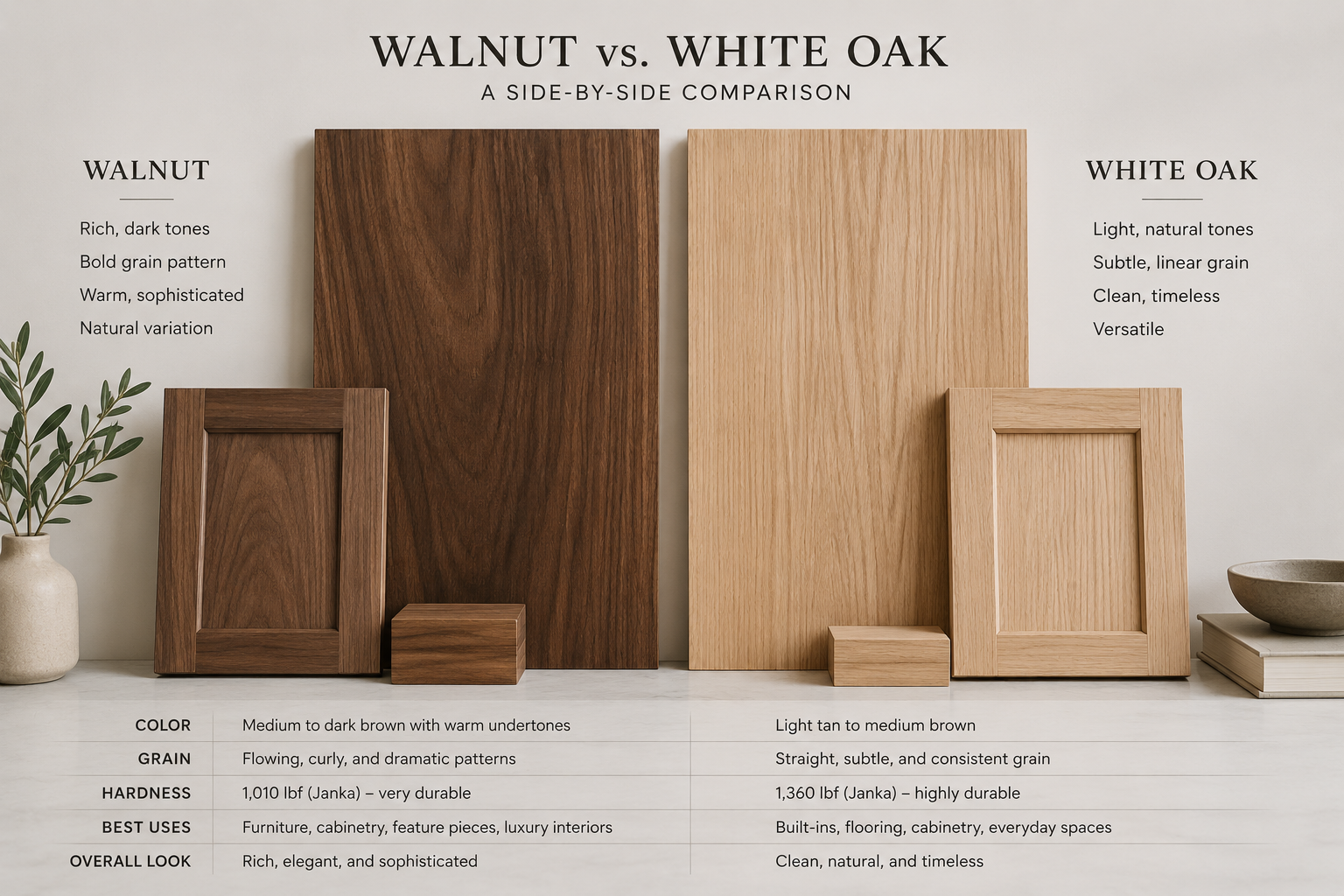
Quick Answer
If you're looking for a light, warm, and timeless aesthetic that works in almost any home, white oak is our most frequently recommended choice.
If you're looking for a richer, more dramatic statement with deep natural color and luxurious character, walnut is difficult to beat.
Neither is objectively "better"—the right choice depends on your project.
White Oak: Timeless, Versatile, and Built to Last
White oak has become one of the most popular hardwoods in modern residential design—and for good reason.
Its subtle grain, warm undertones, and natural durability make it an excellent choice for homes ranging from contemporary and Scandinavian to traditional and transitional.
We often recommend white oak for:
Custom built-ins
Living room media walls
Home offices
Libraries
Kitchen cabinetry
Bathroom vanities
Floating shelves
Entertainment centers
Mudrooms
White oak offers an understated elegance that allows the architecture of the space to shine without overwhelming it.
Walnut: Rich, Sophisticated, and Full of Character
Walnut has long been associated with luxury furniture.
Its rich chocolate-brown color and dramatic grain patterns create an immediate focal point within a room.
Walnut works especially well for projects where you want the wood itself to become part of the design statement.
Some of our favorite applications include:
Dining tables
Executive desks
Reception desks
Built-in bars
Conference tables
Luxury shelving
Feature walls
Hospitality furniture
Few materials create the same warmth and depth as natural walnut.
Comparing White Oak and Walnut
Appearance
White Oak
Light to medium brown
Warm, natural tones
Subtle grain
Clean, contemporary appearance
Complements a wide variety of interior styles
Walnut
Deep brown coloration
Rich natural variation
More dramatic grain
Luxurious appearance
Creates a stronger visual statement
If your goal is a bright, airy space, white oak is often the better fit. If you're looking for warmth and contrast, walnut delivers a bold, sophisticated look.
Durability
Both white oak and walnut are premium hardwoods that perform exceptionally well in custom furniture and architectural millwork.
White oak is slightly harder and tends to resist dents and wear a bit better, making it an excellent choice for high-traffic family spaces.
Walnut is still very durable but is somewhat softer, which means it may show dents or scratches more readily over time. Many clients actually appreciate this natural patina, as it gives walnut furniture even more character.
Cost
Material pricing changes throughout the year, but in general:
White oak typically offers better overall value.
Walnut is usually one of the more premium hardwood options.
The total cost of a custom project is influenced by much more than the wood species alone. Design complexity, fabrication time, finishing, hardware, and installation often have an even greater impact on the overall investment.
For that reason, we always encourage clients to consider the entire project rather than selecting materials based solely on lumber cost.
Which Wood Is Better for Built-Ins?
For most custom built-ins, white oak is our recommendation.
It provides:
Excellent durability
Timeless appearance
Beautiful natural grain
Outstanding versatility
Strong long-term value
Its lighter color also helps built-ins feel integrated into the architecture of the home rather than dominating the room.
That said, walnut can be stunning when used intentionally—particularly in libraries, home bars, executive offices, or media walls where a more dramatic aesthetic is desired.
Which Wood Is Better for Dining Tables?
Both are excellent choices.
White oak creates a lighter, casual elegance that's well suited for everyday family living.
Walnut creates a more formal, refined statement and is often chosen for dining rooms where the table serves as the centerpiece of the space.
Which Finish Works Best?
One of the biggest decisions isn't just the wood species—it's the finish.
We typically recommend high-performance commercial-grade finishes that protect the wood while preserving its natural beauty.
Many homeowners today prefer:
Natural matte finishes
Low-sheen clear coats
Invisible-looking finishes that allow the wood's character to remain the focus
The right finish enhances the beauty of both white oak and walnut while providing the durability needed for everyday use.
Can White Oak or Walnut Be Stained?
Yes—but we often encourage clients to celebrate the natural beauty of the wood rather than trying to make one species resemble another.
White oak looks exceptional with clear finishes that highlight its warmth and grain.
Walnut is prized specifically for its naturally rich color and generally requires little more than a clear protective finish.
Which Wood Is Easier to Maintain?
Both species require very little maintenance.
For most projects we recommend:
Cleaning with a soft, damp cloth
Avoiding harsh household chemicals
Using coasters under beverages
Protecting surfaces from excessive moisture and prolonged direct sunlight
With proper care, both white oak and walnut can remain beautiful for decades.
Our Recommendation
Clients often ask us which wood we would choose if it were our own home.
Our answer depends on the project—but for most built-ins and architectural millwork, we recommend white oak because it offers the ideal balance of durability, versatility, timeless style, and long-term value.
For statement furniture, executive offices, reception desks, bars, and feature pieces, walnut remains one of our favorite materials because of its richness, depth, and unmistakable character.
The best choice ultimately comes down to how you want your space to feel.
Frequently Asked Questions
Is walnut more expensive than white oak?
Generally, yes. Walnut is typically one of the more premium hardwoods, although pricing fluctuates based on market conditions and availability.
Does walnut fade over time?
Like most natural woods, walnut will gradually lighten with exposure to sunlight. High-quality finishes help protect the wood, but some natural aging is expected and contributes to its character.
Is white oak a good choice for modern homes?
Absolutely. White oak has become one of the defining materials in contemporary residential design because of its clean grain, warm color, and versatility.
Which wood increases home value?
Well-designed custom millwork—regardless of species—adds the greatest value when it's thoughtfully integrated into the home. Choosing a timeless material like white oak or walnut ensures your investment will continue to look beautiful for years to come.
Ready to Choose the Right Material?
Selecting the right wood is one of the most important decisions in any custom project. Whether you're planning built-ins, a dining table, custom cabinetry, or a commercial space, we'll help you compare materials, finishes, and design options to create a solution that's tailored to your home or business.
Contact 4th Edition Design to schedule a consultation and start designing your custom project.